Tree Removal
Tree Removal in Wanaka
As a last resort when they have out stayed their welcome... Whether it is a straight forward fell or a controlled dismantle in a delicate space, we have the skills and equipment to get the job done safely and efficiently.
When removal is right
Removal is a last resort, and sometimes the right one
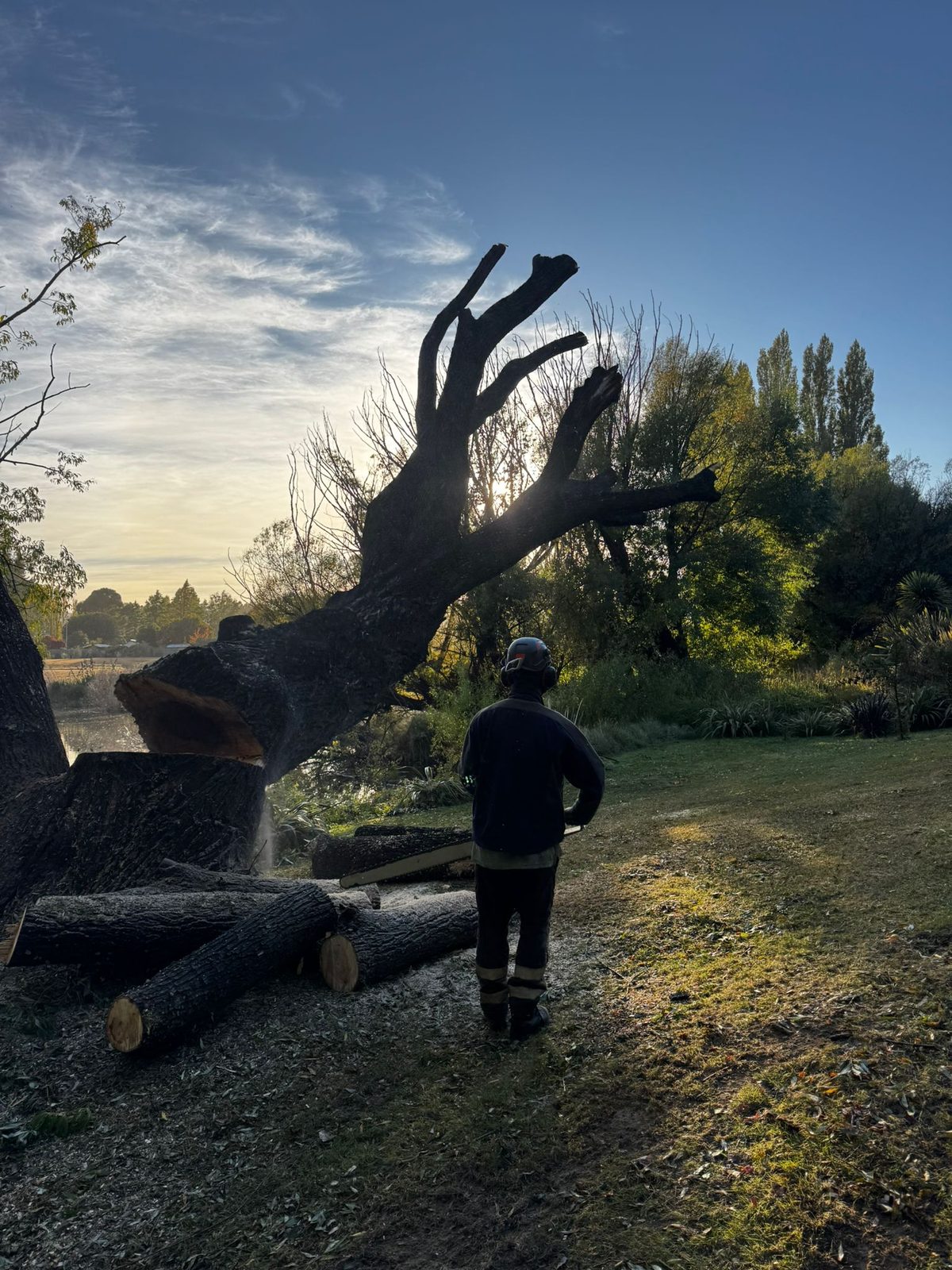
We would rather prune a tree than remove it, and we will say so if that is the better answer. But some trees have outstayed their welcome: they are dead or dying, they have outgrown the section, they are lifting a driveway or shading a house all winter, or the species was never a good choice for the spot. When that is the case, the kindest thing for the garden is to take the tree out cleanly and plant something better.
We also donate to tree planting charities to help offset the trees we remove, and we can help you choose and plant a replacement that suits the space.
Two ways to take a tree down
How a tree comes down depends entirely on what is around it.
A straight forward fell
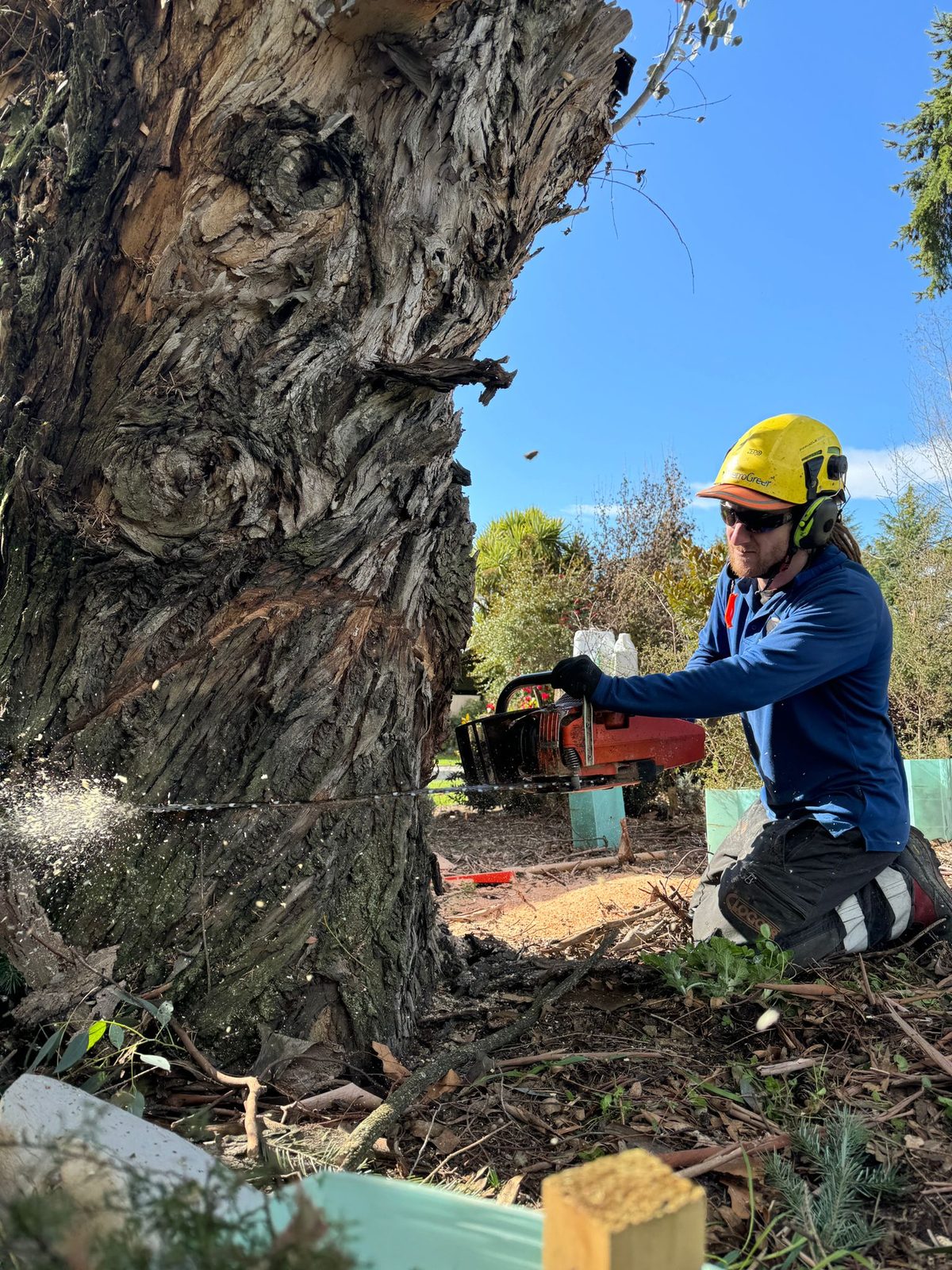
Where there is room for the whole tree to fall, it is felled from the ground with a directional cut and, if needed, a pull line. It is the quickest and cheapest method, and only an option when the landing zone is genuinely clear.
A controlled dismantle
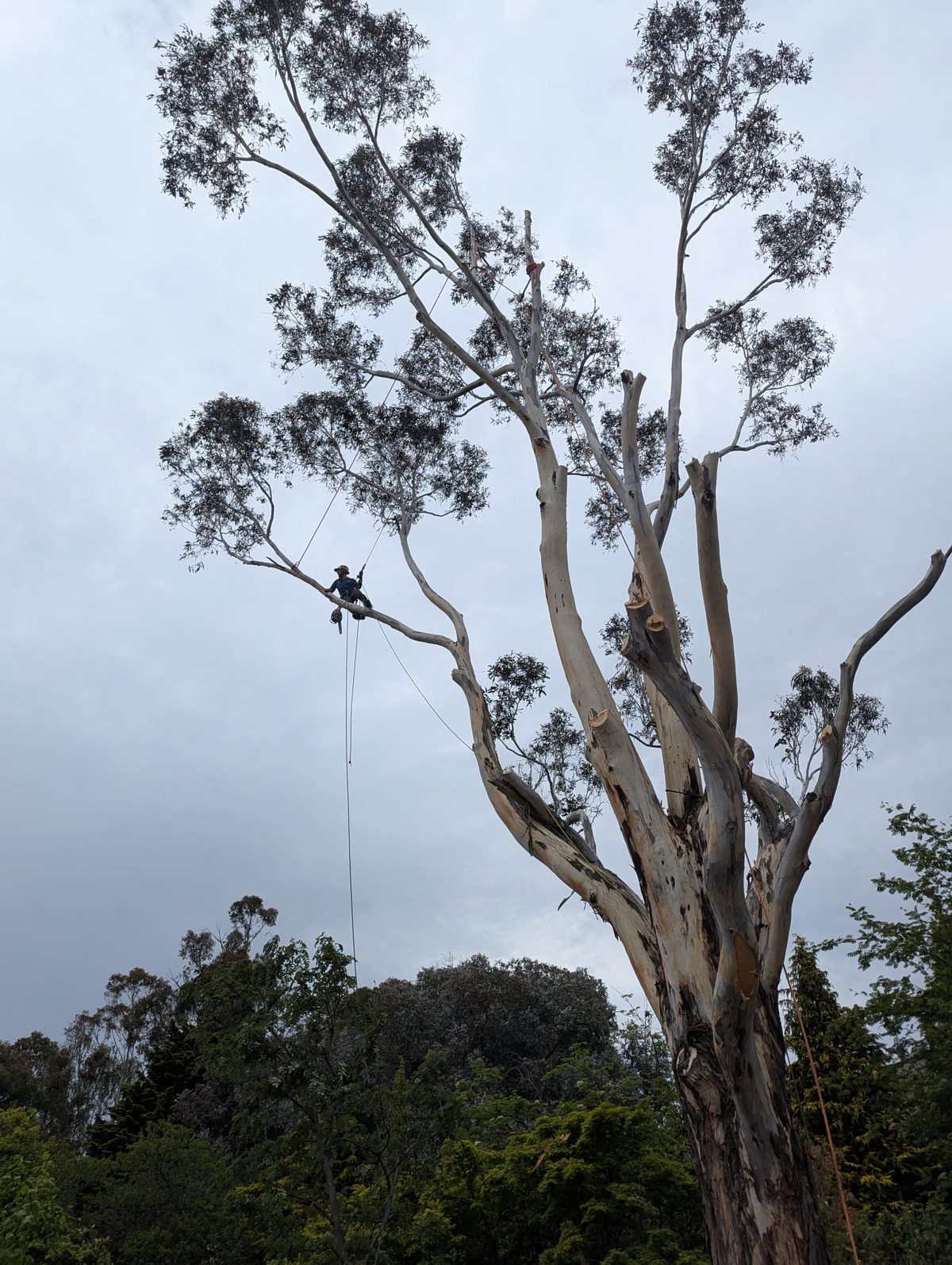
In a garden, beside a house, over a fence or near power lines, the tree is climbed and taken down in pieces. Limbs are cut and lowered on ropes, or rigged to swing clear of anything below, and the trunk comes down in sections. It takes longer and it is the only safe way in a delicate space.
How a removal runs
Removals are planned before the first cut is made.
Look, plan, price
A free visit to look at the tree, what it could hit, how the crew and gear will get in, and where the wood will go. You get a price and a plan before anything is booked.
Rig, cut, lower
On the day the ground is protected where it needs to be, the drop zone is kept clear, and the tree comes down the way the plan says it will. The climber and the ground crew talk to each other the whole time.
Chip, stack, tidy
Brush goes through the chipper as it comes down. Logs are cut to firewood lengths, left as rounds, or set aside for milling if the timber is worth it. The site is raked and left as we found it, minus the tree.
What affects the price and timing
The price of a removal follows the difficulty, not the height. A tall tree in a paddock can be cheaper than a modest one wedged between a house, a glasshouse and the neighbour's fence, because every limb of the second one has to be lowered by hand. Species matters too: a brittle poplar or a heavy, hard gum takes more care than a pine of the same size. Access for the chipper, what you want done with the wood, and whether the stump is to be ground out all go into the figure.
Most residential removals are a day's work. Large trees, or several trees on one site, can take longer and are easier to schedule in advance. If a tree has failed in a storm and is resting on a roof or a line, that is urgent and we will say what can be done and when.
Protected trees and permission
Most trees on a residential section can be removed without any consent. Some trees are protected under a district plan, and some sites have conditions attached to them from when they were subdivided. If a tree is large, old, in a historic area or part of native bush on rural land, it is worth a quick check with the council before anything is cut, and if it is on a boundary, a word with the neighbour too. Tell us where the tree is and we will say if that check is needed.
Tree removal questions
Do you remove the stump as well?
The tree is cut as low as practical. Grinding the stump out is a separate job with its own machine; ask when you get in touch and we will include it in the quote or arrange it.
Can I keep the wood for firewood?
Yes. Logs can be cut to firewood length and stacked where you want them. Freshly cut wood needs a season or two to dry before it burns well.
What happens to the branches?
They go through the chipper on the day. The mulch is yours to keep for the garden, or we take it away to be reused in the community.
How close to the house can you work?
Right up to it. A controlled dismantle lowers each piece on ropes, so trees that overhang roofs, decks and glasshouses can be taken down without touching them. It takes longer than a straight fell, which is reflected in the price.
Why do you donate to tree planting charities?
To help offset the trees we remove, because every tree that comes down should be replaced somewhere. We are happy to plant a new tree on your own place too.
Safety first
Why this is a job for a trained, insured crew
Removing a tree is the most hazardous thing an arborist does. WorkSafe New Zealand notes that tree work exposes workers to a number of hazards, and that working at height increases the risk of harm. That is why it is worth asking who is doing the climbing, what their training is and whether they are insured.
Trees Company is qualified, insured and owner-operated. Call for a free look at the tree and a straight answer on whether it should come down.
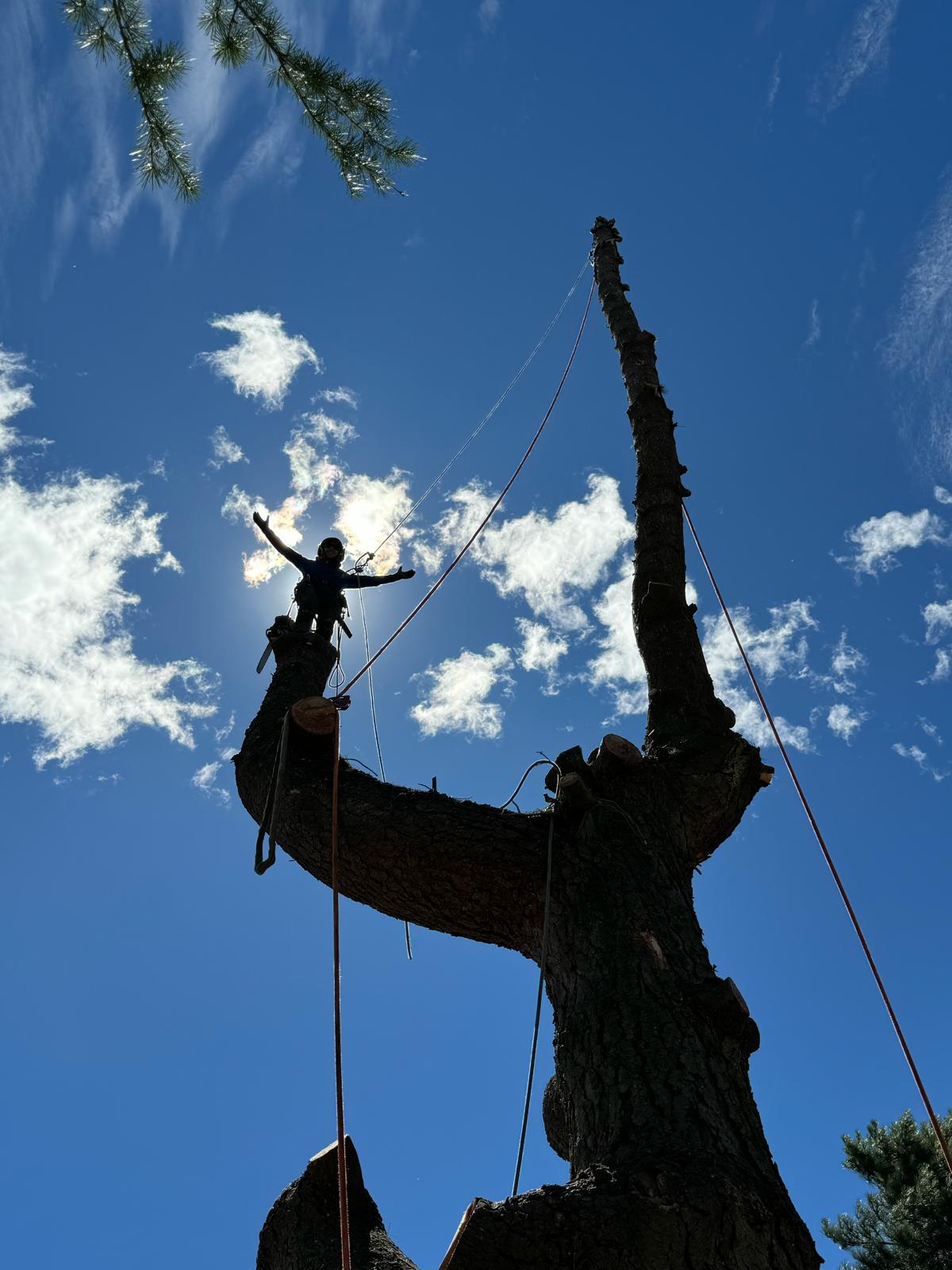
Contact us for a free consultation or some friendly advice
Its our mission to help keep trees healthy and our customers happy.
Our other services
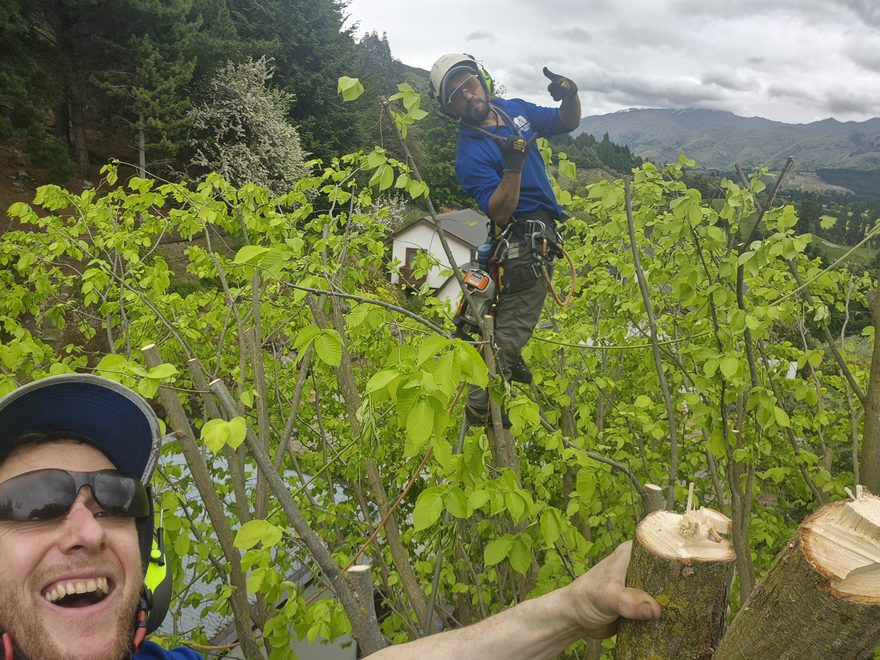
Tree Pruning
Whatever your requirements, be it for reasons of form, light, safety or aesthetics we want to provide a tree pruning solution for you.Read more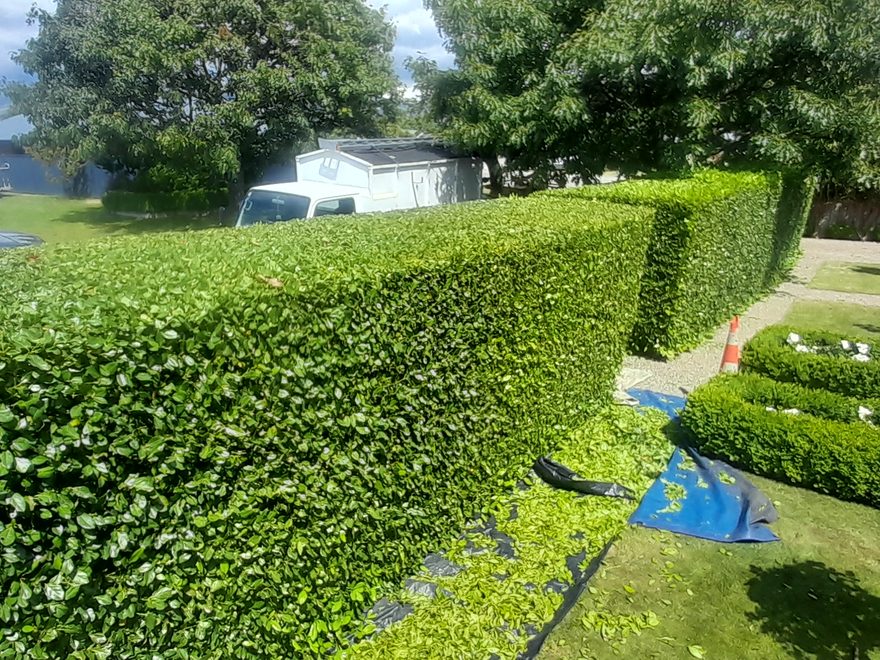
Hedge Trimming
We are expert hedge trimmers and can access those more difficult ones that you or your gardener don't want to tackle!Read more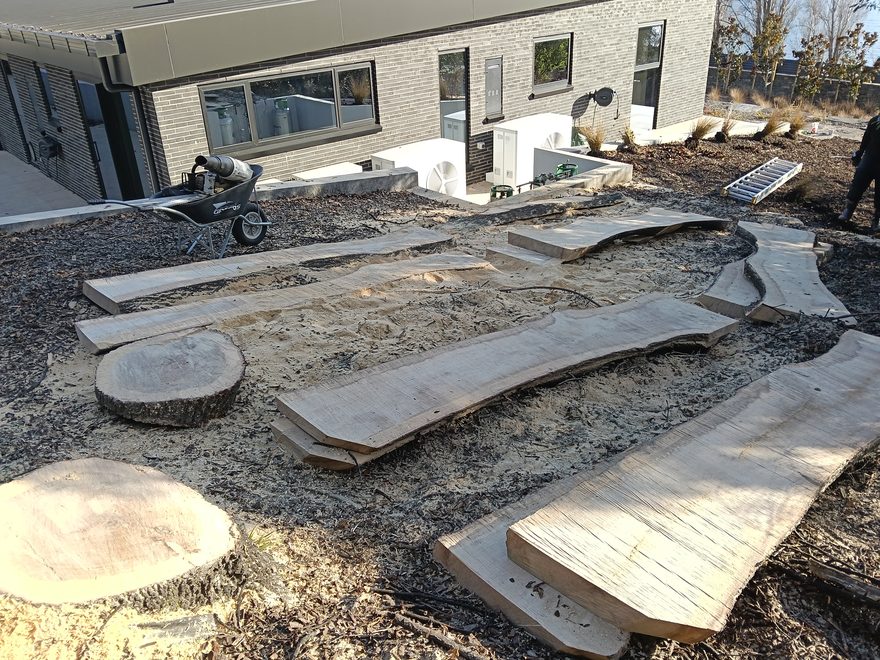
Log Milling
Too good for firewood? We can slab your valuable timber and help stack it for drying on your property.Read more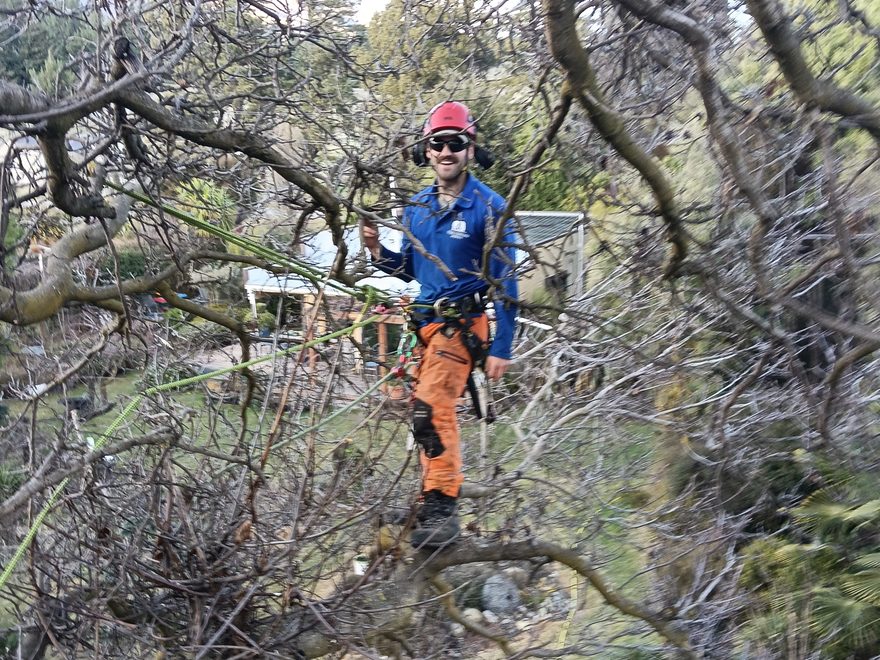
Tree Bracing
Where limbs and even whole leaders pose a safety concern but the tree's form needs to be preserved, bracing in combination with a weight reduction is a good option.Read more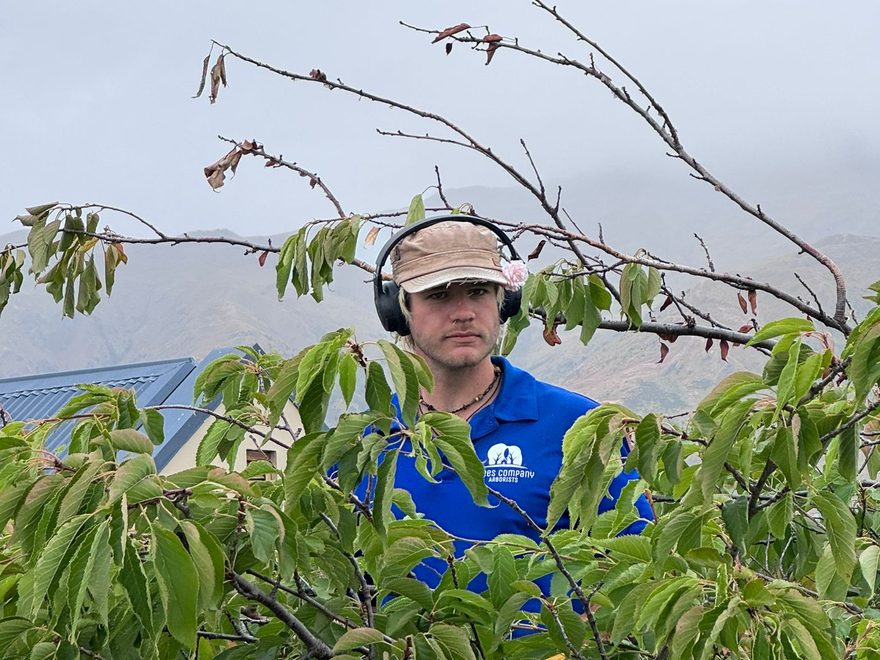
Tree Planting
We can advise you on species and location. Source trees and protection systems and if you would like we can plant, or help you plant them too.Read more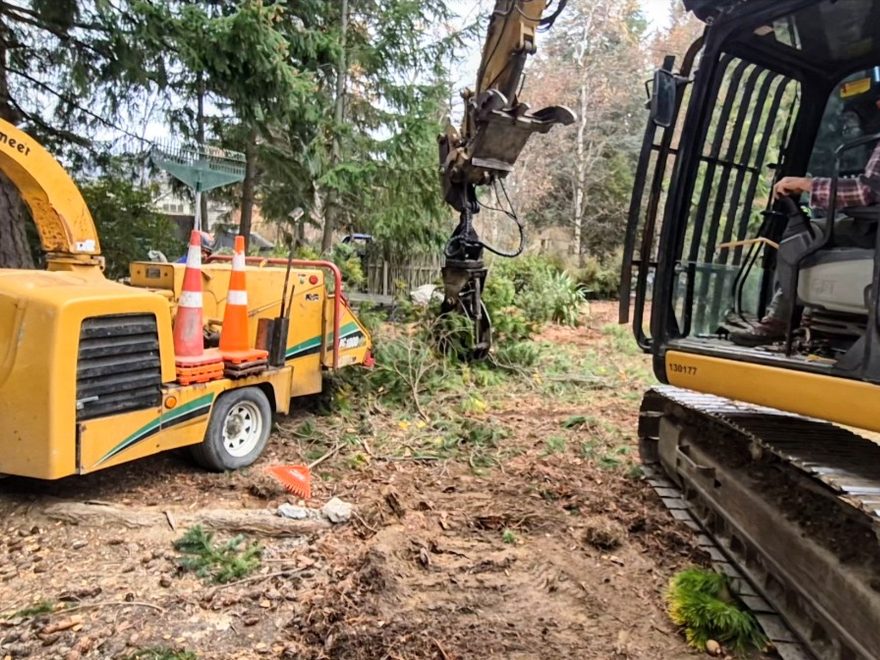
Wood Chipping
Whether its work that we have done or trees you have cut your self we can turn them into wood chip mulch.Read more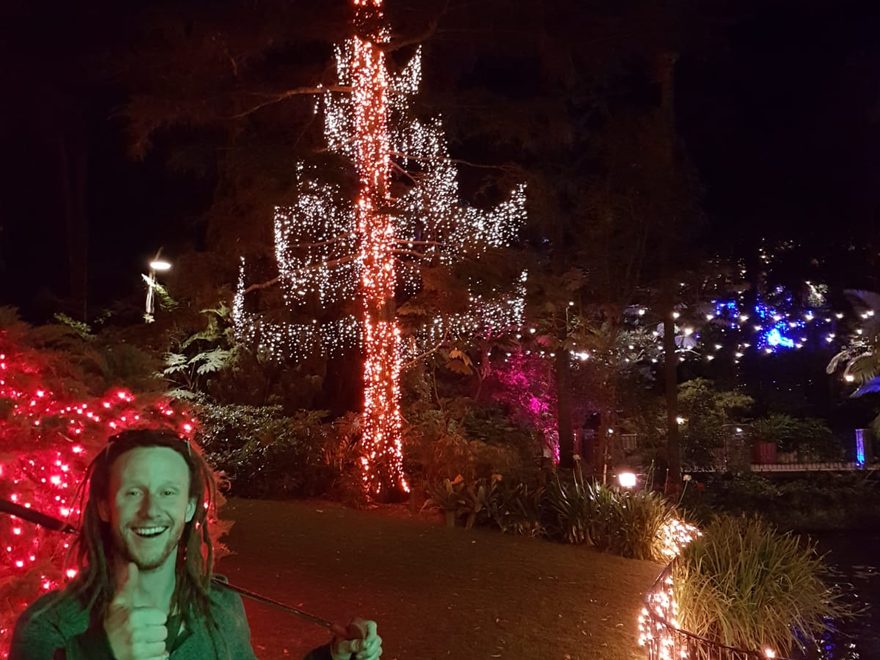
Tree Installations
We can help install lights, bird boxes, zip lines, rope swings or rescuing cats and drones. Any excuse to climb a tree!Read moreFree consultation
Contact us
Contact us for a free consultation or some friendly advice
027 516 6690- Wanaka, Otago
- Mon-Fri: 7am - 5pm
- info@treescompany.co.nz